
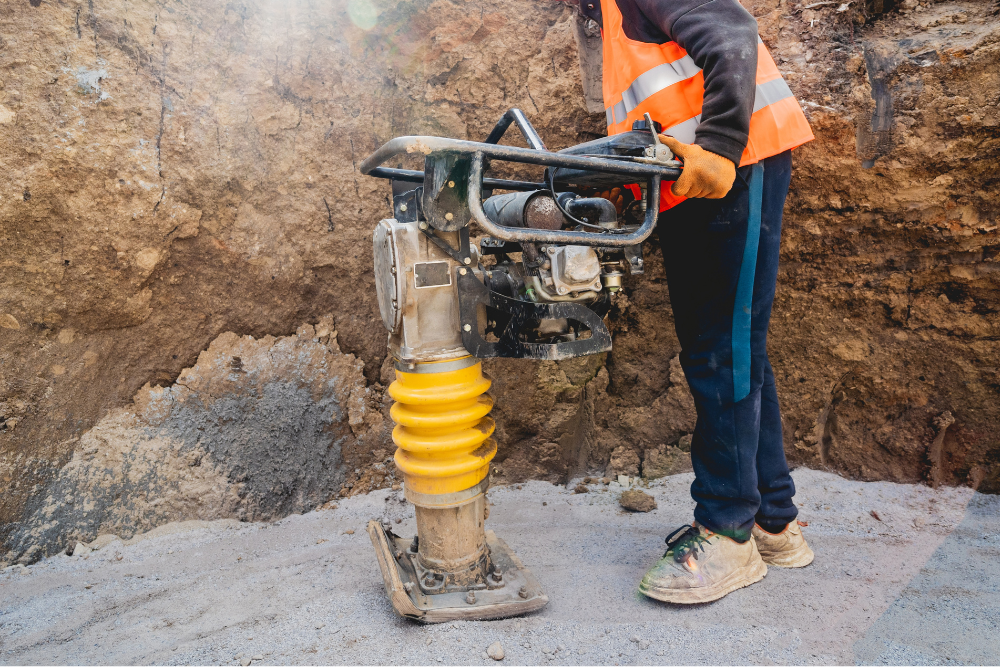
Soil compaction is an important step in many construction projects. When the ground is not packed properly, foundations can shift, pavement can crack, and structures can fail over time. Two of the most common types of construction equipment for this job are plate compactors and rammers. Below, we’ll discuss what each of these types of equipment are, how they work, and the applications they are used for. For assistance choosing the compaction equipment that’s right for your project, or to buy or rent compaction equipment in New England, please contact our team at Pro Tool & Supply and Pro Equipment Rental today!
What Is a Plate Compactor?
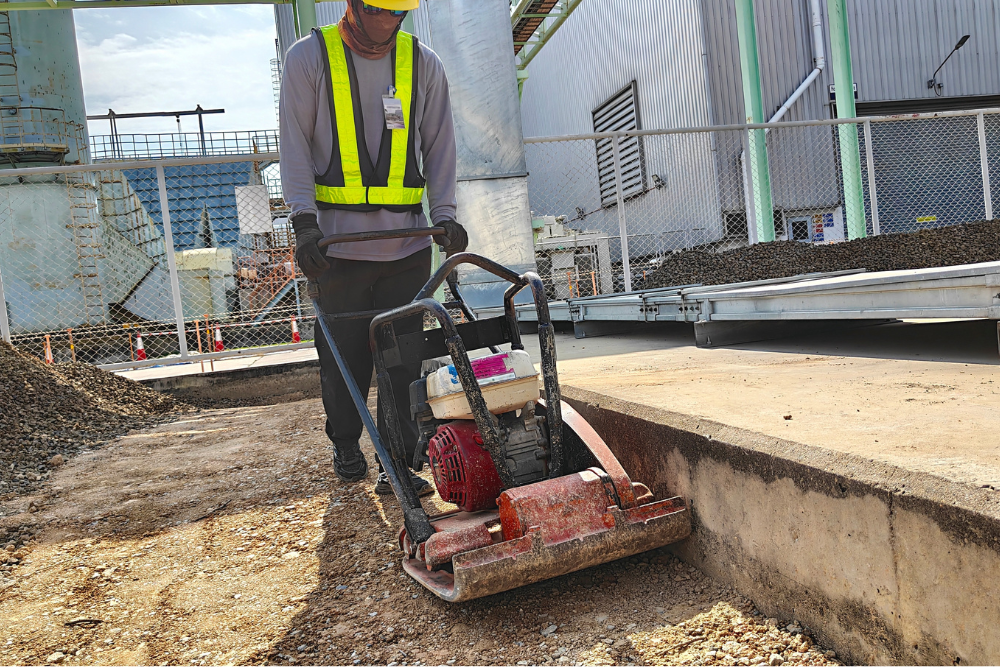
A plate compactor uses a flat steel plate and a vibrating engine to press down on the ground. The plate moves rapidly to apply steady pressure across a wide surface area. This action pushes air pockets out of the soil and creates a firm, level base. Plate compactors move forward as they work, which lets you cover large areas quickly. They are simple to operate and easy to control, making them a popular choice for many compaction tasks.
What Is a Rammer?
A rammer, sometimes called a jumping jack compactor, works in a very different way. Instead of vibrating across a wide plate, it delivers powerful impact force through a small foot. The machine hops up and down as it compacts the ground beneath it. This concentrated force reaches deeper into the soil than a plate compactor can. Rammers are built for tight spaces and situations where deep compaction matters more than surface coverage.
Applications for Plate Compactors vs. Rammers
The type of soil you are working with often decides which machine you need. Each one performs best with specific materials and conditions:
- Plate compactors work well with granular soils like sand and gravel. They are often used for driveways, walkways, patios, and paving base preparation.
- Rammers are ideal for cohesive soils like clay and silt. They excel in trenches, around foundations, and in narrow spaces where deep, focused compaction is needed.
Matching the right type of compaction equipment to the material that needs to be compacted helps you avoid weak spots and costly rework down the road.
How Do You Decide Between the Two?
Start by looking at the scope and layout of your project. If you need to compact a broad, open surface with loose material, a plate compactor is usually the smart choice. If you are packing narrow trenches or working with dense clay, a rammer will give you the deep force you need. Consider the depth of compaction, the size of the area, and the space you have to work in. When you weigh these factors together, the right choice often becomes clear.
Buy & Rent Compaction Equipment in New England from Pro Tool & Supply!
Pro Tool & Supply and Pro Equipment Rental provides contractors and construction companies in New England with sales and rentals of compaction equipment, including plate compactors, rammers, and compaction rollers! If you are a contractor in New England that is interested in purchasing or renting compaction equipment for your business, please contact Pro Tool & Supply by calling us at (857) 706-2980 or by filling out the contact form on our website! To get a free estimate on compaction equipment from Pro Tool & Supply, please fill out the “Request a Quote” form on our website!